
Money and Currency in Cuba
National Currency
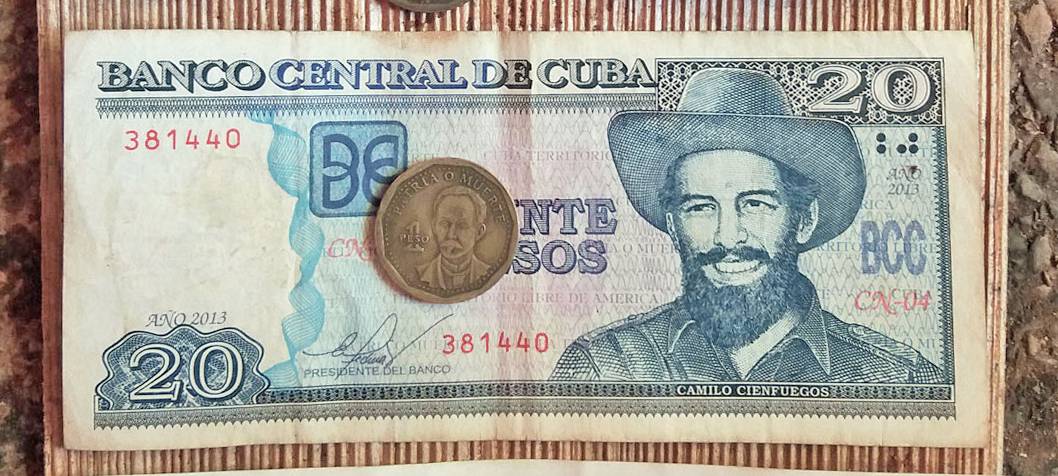
The monetary situation in Cuba is quite complex. Cuba's official currency is the CUP - Peso Cubano. Foreign currencies (especially USD and EUR) are also widely used.
Cuban Pesos (CUP) formally have a fixed value of 25 CUP = 1 USD, however, the foreign currency exchange rate for cash is 120CUP = 1 USD. When changing USD, an 8% conversion fee will apply so the effective rate is 110CUP = 1USD. All other currencies have a 2% conversion fee.
Last Updated: August 1, 2025
Cuba Money Tips and Recommendations
Cuba has a complex monetary system. Here are the most important things to know before you travel — from which currency to bring to how to handle ATMs and cash.
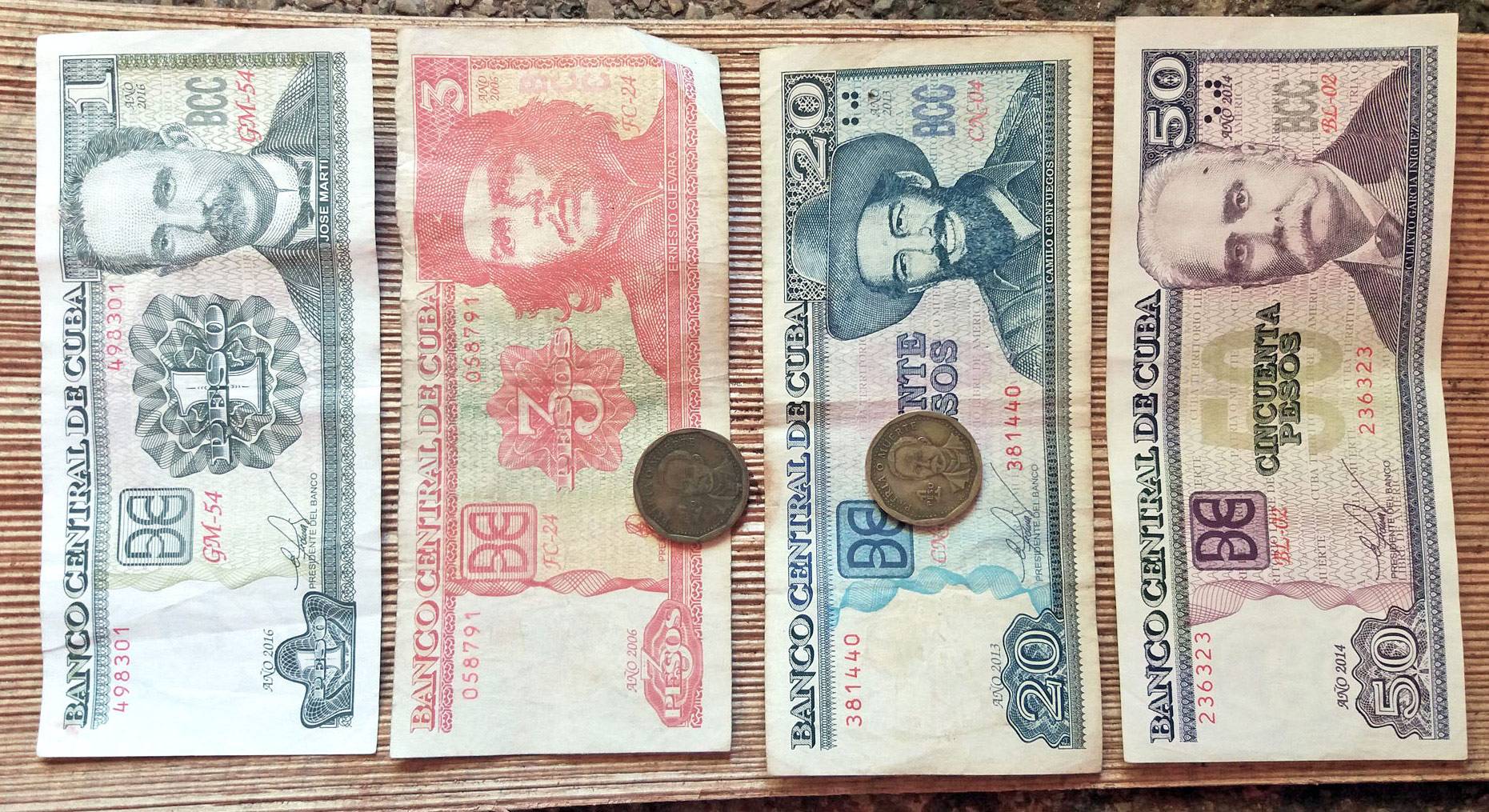
Bring plenty of small bills (1, 5, 10, 20). Dollar bills ($1) are handy for tipping. Never use foreign coins. |
EUR and USD are the most useful currencies. GBP and CAD are often accepted, but may not be accepted in all restaurants, casas, taxis, etc., so we recommend changing to EUR or USD. |
Always take more rather than less, because Cuba is likely to be more expensive than you imagine. Don't spoil your trip to Cuba by feeling short of funds. |
Do not change your money to CUP at banks, hotels, or exchange houses that use the official rate. The unofficial rate offered in the private sector may be much higher. Guides and casa owners are usually the best people to ask for help changing money, avoid changing with street hustlers |
Exchange only small amounts of money to CUP at any one time. Changing no more than US$50-100 at a time will avoid having CUP to change back. Many travellers pay for everything in EUR or USD instead of changing money. Your change will usually be in CUP, not foreign currency. |
Change back your Cuban Pesos before you leave, they are neither valid nor exchangeable outside of Cuban territory. |
Don't rely on being able to use ATMs. ATMs give you the official exchange rate which is very poor compared to the unofficial exchange rate. Also, sometimes they run out of money or aren't working due to power outages, or simply won't accept your card for reasons unknown. |
Private businesses (taxis, guesthouses, bars, private restaurants, small shops) will most likely prefer payment in foreign currency. |
All Cuban State operated sites (Museums, Parks, State run restaurants, official sites, ETECSA, markets) will always require payment in CUP, with exception for the MLC stores. |
Some Hotels, most grocery stores, state-owned bars, and all medical facilities will only take card payment, not cash. Very few of these places accept US cards. |
If you have many smaller bills in CUP, gather these into groups of 1000CUP to help you pay faster. |
Rules and regulations change quickly and often in Cuba, check on the currency situation before you go. |
Frequently Asked Questions
Euros (EUR) and US Dollars (USD) are the best currencies to bring to Cuba in the areas where our tours visit. These are the most widely accepted by locals therefore they can be used to pay directly to businesses or to exchange for CUP. British Pounds (GBP) has the highest official exchange rate but may not be as in demand by local businesses.
Below is the complete list of foreign currencies
- These currencies can be exchanged at the CADECA and at most banks (surcharge is 2% for most currencies and 8% for USD)
- We strongly recommend exchanging only small amounts of CUP currency at any one time (e.g. 50-100EUR).
| *Euro | EUR |
| *United States Dollar | USD |
| *British Pound | GBP |
| Canadian Dollar | CAD |
| Swiss Franc | CHF |
| Japanese Yen | JPY |
| Mexican Peso | MXP |
| Danish Krone | DKK |
| Norway Krone | NOK |
| Sweden Krona | SEK |
*Preferred currencies
Click here to see current exchange rates
No, it is actually the most popular currency to use. USD was prohibited in 2021 but these laws were changed in mid-2023. Locals can now exchange USD for CUP and other foreign currencies and deposit USD cash into their bank accounts.
Foreign currencies can be exchanged to CUP (at the official government rate) at airports, banks, hotels, exchange houses (CADECA), and shopping malls. They can also be exchanged in the informal markets (black market) usually at a rate much higher. This is a common, but not legal, practice. A popular resource for the unofficial exchange rate is the website El Toque. The informal rate should be seen as a suggestion, you may not receive this rate.
CADECA
The Official Exchange Houses (CADECA) in all cities around Cuba. They provide the following services:
- Exchanging cash between foreign currencies and CUP.
- Exchanging traveller's cheques to CUP. Nowadays not popular nor convenient.
- Credit Card - Cash advances (Visa and MasterCard). Possible throughout Cuba and from accounts in every currency, except for cards linked to banks in the United States. Cirrus and Maestro are not accepted at all in Cuba.
ATMs - Credit/Debit Cards
The ATMs (Automatic Teller Machines) should work in Cuba for Visa, Mastercard, and American International Service (AIS). You will need a pin number for your credit card to be able to use the ATMs.
Except in rare circumstances, no Card issued by a US institution will work in Cuba, so it is important to check that your bank is not associated with a US financial institution. We do know that Visa credit cards obtained through the following banks will NOT work in Cuba:
- Travelex
- Citibank
- Westpac (Australia)
- St George (Australia)
- 28 Degrees
Some rechargeable Travel Cards (Visa and Mastercard) may work in Cuba even though obtained through these banks.
We recommend that you bring enough cash for the entirety of your stay. Check with your bank before you come to Cuba to find out if your card will work.
What is the MLC Card?
MLC ('Moneda Libremente Convertible') is Cuba's official digital currency that represents a value of 1 MLC = 1 USD. Because of this fixed value, it is often simply referred to as "dollars". You can purchase a prepaid MLC debit card to use at locations that do not accept cash.
- MLC pre-paid cards are sold at CADECAS in denominations of US $50, $100 $200, $500, and $1000
- There is a US$5 charge for the card, so for example, you will pay US$50 for a card worth US $45
- The remaining balance of your MLC card can be refunded if the CADECA at the airport has enough funds
- The card expires in 5 years

Can I Use Cryptocurrency in Cuba?
Cryptocurrency is accepted by some guesthouses and a couple of restaurants in Havana.
Glossary of Cuban Money Terms
- CUP- The Cuban Peso. The only official currency in Cuba. CUP has no value outside of Cuba.
- M.N. - Moneda Nacional. This is just another name for CUP.
- CUC- Cuban Convertible Peso. Cuba's former second currency, but as of 2021 the CUC was taken out of circulation.
- MLC- Moneda Libremente Convertible (Freely Convertible Money). Cuba's dollar equivalent digital currency.
- MLC Card- A pre-paid card you can buy in Cuba that will work in government stores, restaurants, and hotels.
- Official Rate- The CUP exchange rate offered in CADECAs, ATMs, Banks, Hotels, and with state-run entities. Static, set by the government.
- Unofficial Rate- The exchange rate when trading with individuals or private businesses. Also known as black market or 'por la izquierda'. Current rates: El Toque