
Colon Cemetery: Havana’s Eclectic Necropolis
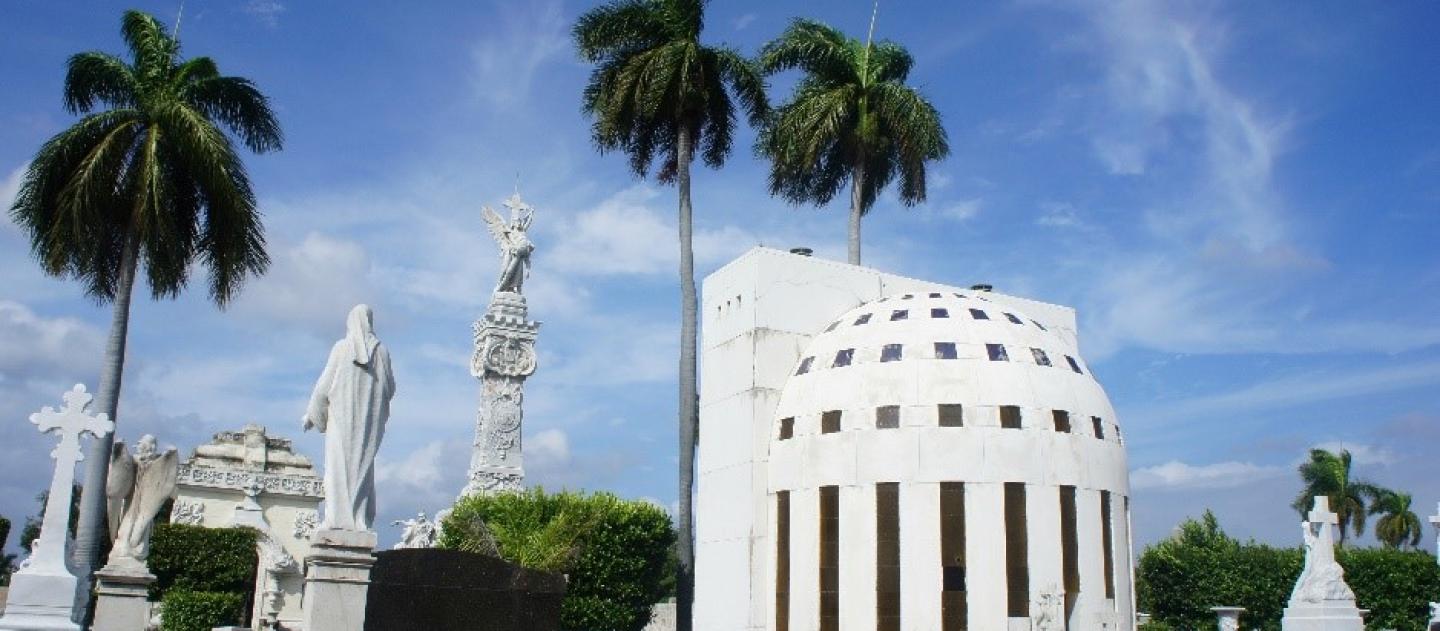
Christopher Columbus Necropolis (Necrópolis Cristóbal Colón) with an area of 56 hectares in the heart of modern Havana is considered among the best monumental architectural cemeteries in the world.
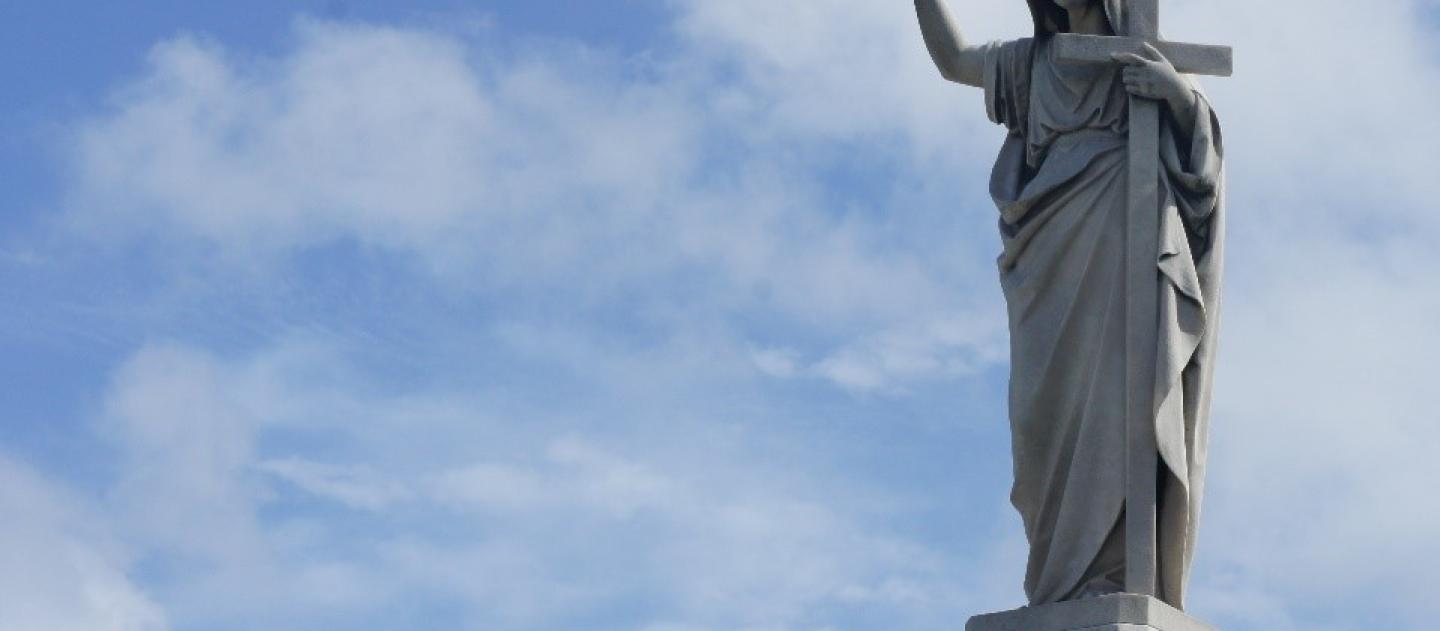
Once you are among its interior avenues and perfect delimited quarters, you can appreciate all the architectural styles which made this declared National Monument a jewel of Cuban architecture. In this sacred place we can enjoy Romanesque-Byzantine architecture, Gothic towers, Greek pavilions, Medieval castles, Pyramids, Art Deco, as well as the new trends of Modernism.
Carrara marble was used in the construction of the sculptures and monuments. The value of this open-air museum is incalculable; and some of its monuments have increased their value more than one hundred times the cost of the original construction.
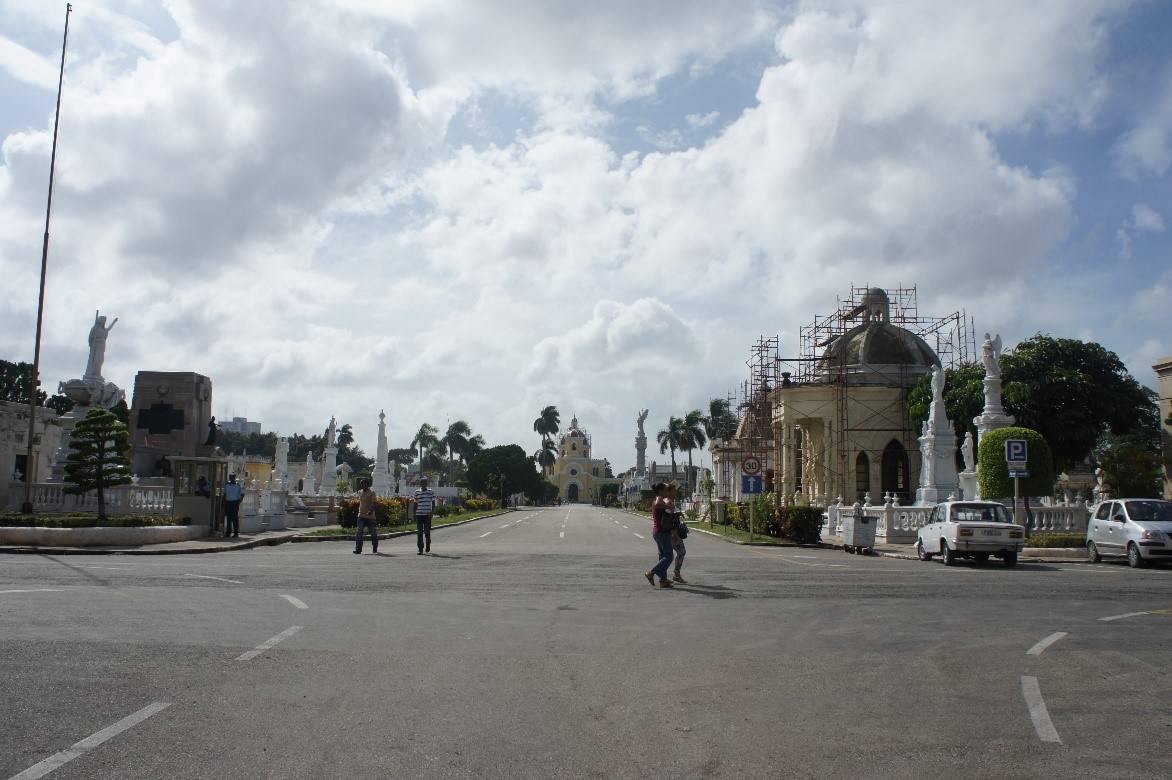
The young Spanish Architect Calixto Aureliano de Loira y Cardoso designed the necropolis in Havana; he also designed the main doors, the Tobias Gallery, the central Chapel, the surrounding walls and other buildings related to the funerary activities. On October 30th 1871 the first stone was placed on a spot which would later be the main entrance.
The first building to be finished was the Tobias Gallery, an enormous catacomb appointed to house the bodies of the numerous deaths which took place every day in the city. As a curious detail, Calixto de Loira himself was the person who inaugurated the first gallery when he died from overwork, on September 29th 1872. The gallery was named after Tobias, who lived during the seventh century B.C. and had the pious job of burying the dead.
The cemetery construction was officially finished at the end of 1886 and according to records the cost of the work rose to 606,727.93 gold pesos. A great number of people who die in the city today are buried in Christopher Columbus Cemetery. It has been calculated that it possesses about 53 thousand tombs between private and public graves.
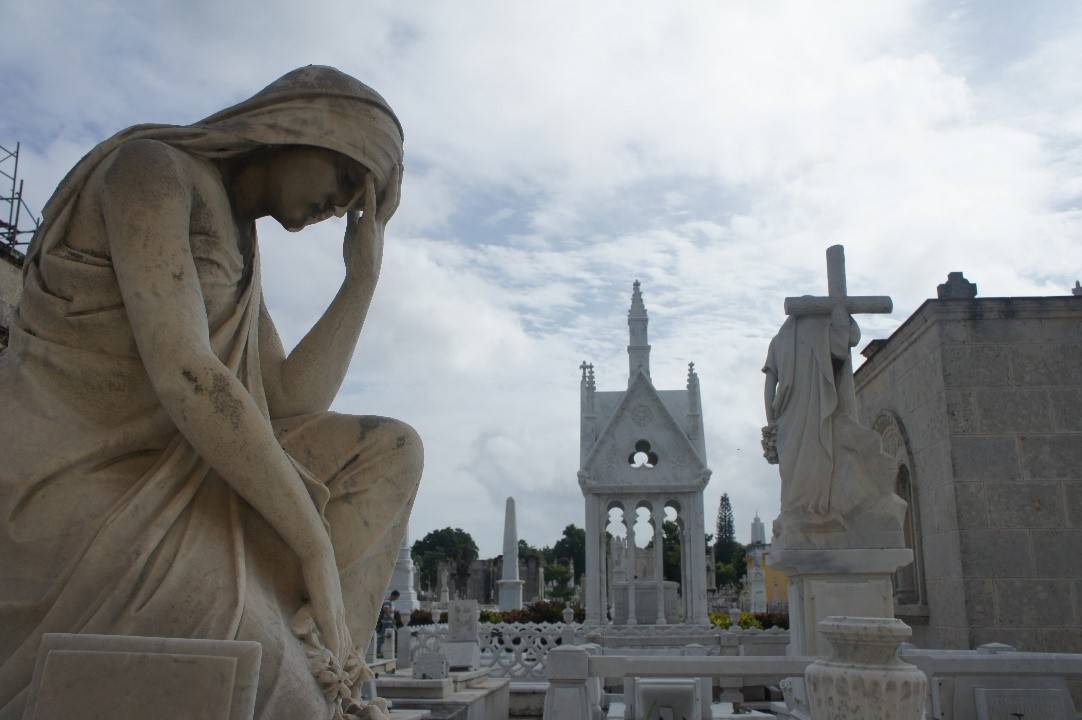
Some of the symbols we find in the cemetery are
- Trees: represent life and its eternal evolution in its ascent to the heavens. Angels: intermediary beings between God and the world.
- Torches: represent the symbol of purification given by fire and light.
- Wings: bring with them the general notion of spiritual lightness and elevation from earth to heaven.
- Cross: the supreme example of Christianity.
- Anchor: regarded to firmness, solidity, tranquility, and fidelity.
- Scales: symbols of justice, dignity and balance.
- Lamb: obedience, sweetness, innocence and pureness.
- Pelican: an expression of paternal love in Christian iconography.
- Pyramid: a powerful symbol capable of overcoming death in a magical sense.
- Tunic: the body of the Angels; the body is the tunic of the soul.
- Columns: represent solidity, connecting heaven and earth.
Monuments which I highly recommend to visit are
- The Pantheon of Major Máximo Gómez Báez, an exceptional military leader of his time, who became the teacher of all the future generation Cuban military bosses, and died in Havana on June 17th 1905.
- The Monument to the Fire Brigade, which honors the 38 firemen who died during the service of their task; a vivid example of bravery and sacrifice.
- The Mausoleum of Catalina Lasa, which shows a true love story and all what is possible to obtain when you really love someone.
- The Christ of the Ascension, one of the most brilliants and marvelous representations of Jesus to be found in the entire necropolis; very few of the representations of Christ are as moving as this one.
- The Tomb of Domino, through which you can have an idea of the popularity of this game for Cubans, there is no better evidence of the importance of dominos than using one to mark someone’s final resting place.
- The Monument to the Medical Students executed on November 27th 1871, which was erected to immortalize and claim the innocence of 8 students of medicine accused of desecrating the tomb of a Spanish journalist.
- The tomb of Amelia Goyre de la Hoz (The Miraculous), a young woman who died on May 3rd 1901, when she was almost at the end of her pregnancy term, and was buried with the child between her legs; and turned to be, that years after she was found intact with the baby in her arms, hence she became popularly known as the Miraculous (La Milagrosa), and it is without any doubt the most visited grave in the cemetery daily.
- The grave of José Raul Capablanca, represented by a white king that honors the best Cuban chess player of all times; Capablanca became the 3rd world Champion from 1921 up to 1927 when he beat Enmanuel Lasker.
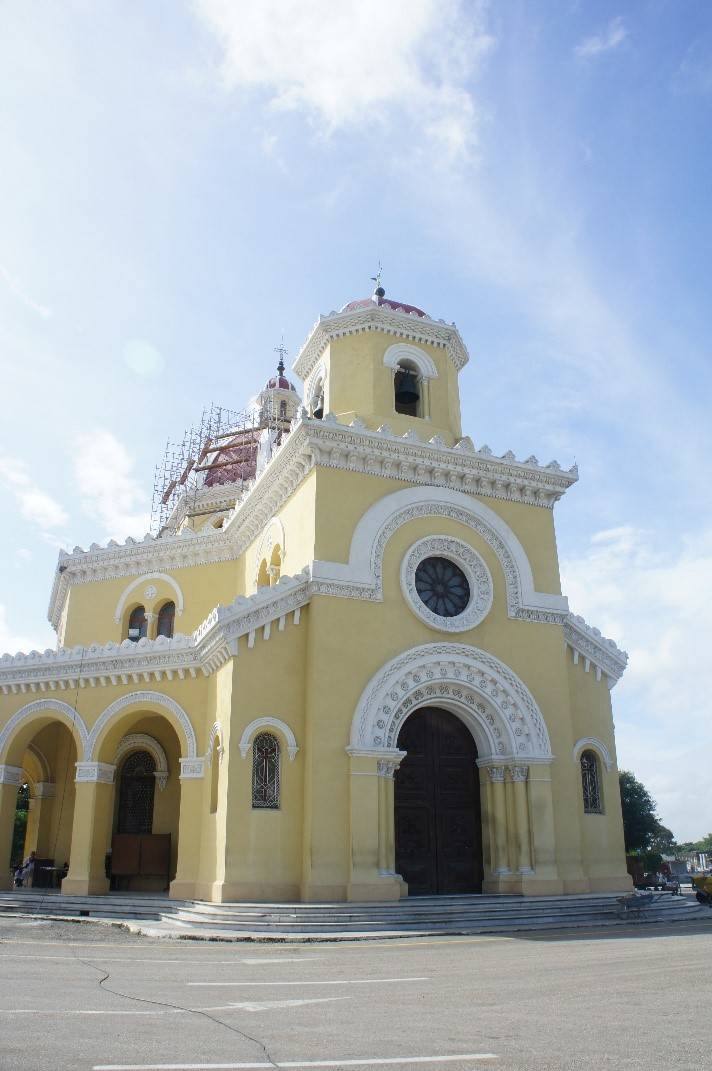
And to end up, I would recommend a look at The Central Chapel, which was inaugurated on July 2nd 1886, and it is the only religious temple in Cuba which forms an octagonal shape, constituting the main building in the cemetery, and represents one of the most refined examples of the funerary arts.
I hope you will have enough time during your stay in Havana to visit this remarkable necropolis. Admission is 5CUC and you can purchase a map guide for an additional 1CUC at the entrance. Open 8-5pm daily.
Location:
Calle Zapata & Calle 12, Vedado, Havana.
Author: Abel Peña Peña
Abel Peña Peña is a Havana local with an extensive knowledge of Cuba’s politics and culture. He has over 10 years of experience as a professional tour guide. In his free time he enjoys working on the restoration of his classic American car.
Uncover more Cuba travel inspiration in our blog
If you've been dreaming of Cuba and want to learn more about this fascinating country before your trip, read our blog for a complete Cuban travel guide with tips and local insights.