Is it legal for U.S citizens to travel to Cuba?

In summary it is illegal for U.S citizens to travel to Cuba without special permission, however many U.S citizens do travel to Cuba every year as tourists without being detected or fined.

About 150,000 Americans go to Cuba each year, with about two-thirds of them getting OFAC's permission, so that means about 50,000 go illegally. Below we suggest how you can go about obtaining a licence to travel to Cuba legally and also, if you decide to visit Cuba illegally, what precautions you can take to not get caught.

Strictly speaking, it is not illegal for US residents to travel to Cuba - an absolute ban was declared unconstitutional in 1963. Freedom of travel was enshrined in the US Constitution which unnumbered Americans fought and died for, over two centuries ago, and have gallantly defended ever since. Presidential authority is limited to preventing US residents from spending money in Cuba. Naturally, as a traveler you require accommodations, food and other necessities — as such, anti-Cuba regulations equate to a ban on travel for US residents. Such is the method by which the Executive Office subverts the US Constitution.

A website with comprehensive information on this subject is www.aaas.org. Read below for a summary.

What is the OFAC?

The Office of Foreign Assets Control is a part of the U.S Treasury Department. This is the agency from which you would apply to get a license to visit Cuba legally. The following is from their website:

"The OFAC administers and enforces economic and trade sanctions against targeted foreign countries, terrorism sponsoring organizations and international narcotics traffickers based on U.S. foreign policy and national security goals. OFAC acts under Presidential wartime and national emergency powers, as well as authority granted by specific legislation, to impose controls on transactions and freeze foreign assets under U.S. jurisdiction. Many of the sanctions are based on United Nations and other international mandates, are multilateral in scope, and involve close cooperation with allied governments."

Heavy fines for those that are caught, are being imposed and at a much greater frequency under the Bush administration. The number of fines levied by the OFAC rose from 188 in 2000, the Clinton administration's last year, to 766 in 2001, the Bush administration's first year.

How to travel to Cuba and not get detected

Here is how people generally get around the laws, and the precautions they take to minimize the risk of being caught:

When unlicensed travelers go to Cuba from the US they normally have to go through a third country. You will frequently see this referred to as the “Gateway” on various boards. The most common gateways to Cuba for unlicensed US travellers are Toronto, Montreal, Nassau, Cancun and Mexico City, and less frequently used Santo Domingo and Montego Bay.

Mexico, and in particular Cancun, appears to be the gateway that offers the least risk of detection. This is because:

  • Unlike Canada and the Bahamas, a traveler leaving from Mexico does not pre-clear US Customs and Immigration. You will not clear Customs/Immigration until you arrive back in the US. In Canada and the Bahamas you will go through US Customs and Immigration at the airport in Toronto, Montreal or Nassau.
  • Cancun is the most popular destination for US tourists in the Caribbean. There is absolutely no reason why US Customs/Immigration would suspect you have been anywhere else but Cancun.
  • You can enter Mexico and re-enter the US using only a certified copy of your birth certificate and a government issued photo id, such as a driver's license (BC/DL) In other words you do not have to show US Immigration your passport upon re-entry to the US. Probably half or more of US tourists who travel to Cancun use this alternate form of identification as their travel documents.

You should take the following steps in travelling back/forth:

  1. Enter Mexico from the US using your BC/DL. Mexico does not stamp passports on exit, although you will need a passport to enter Cuba.
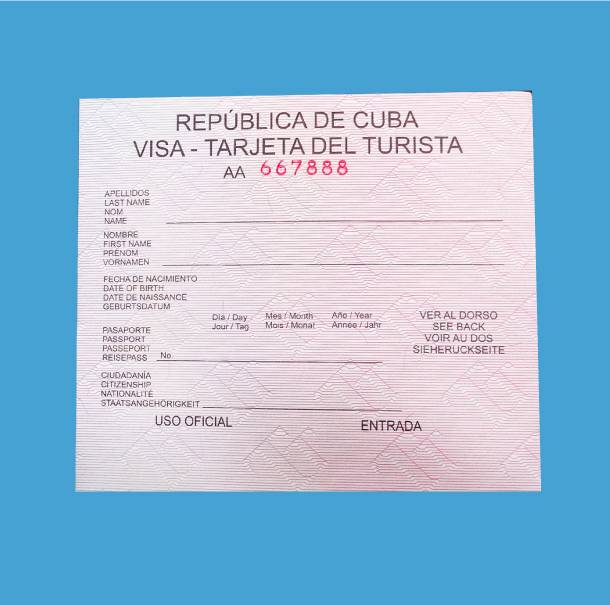
  2. Cuban Immigration does not stamp the passport at the present time, so do not worry about a Cuban stamp.
  3. When you arrive back in Mexico from Cuba you will probably have to present your passport. The entry stamp that is placed there should be the only stamp you receive on your trip. Some people recommend presenting the passport with a $10 bill inside to avoid the Mexican entry stamp. However, now there are posted signs in the Immigration Department discouraging such practices. Either way, the best thing to do is smile, say something nice then ask them in Spanish to please not stamp your passport. “Por favor, no empuje mi pasaporte” should do fine. This is still no guarantee that they won't however. If you use the BC/DL to re-enter the US this step is unnecessary.
  4. After you arrive in Mexico make sure you strip all HAV luggage tags from you checked baggage.
  5. Throw away your Cuban tickets, boarding passes and any other paper evidence of your Cuban trip.
  6. Do not list Cuba as a Country visited on the Customs Declaration form.
  7. Do not bring back any high profile Cuban souveniers---cigars, rum, t-shirts. If they do find these items in your luggage you can always say you bought them in Cancun (as they do sell them there too).
  8. Use your BC/DL when you clear Immigration in your arrival city.

If you can't bring yourself to lie to the US immigration officials that you have been to Cuba, you may still be ok. If you tell them the truth, they may just wave you on through as many immigration officials don't agree with the US travel ban to Cuba and/or can't be bothered with the paper work.

A further precaution that can be taken is that if you buy your airtickets to Cuba with a credit card, get the travel agent to not specify the destination (eg 'air ticket' rather than 'air-ticket to Havana').

Accessing your money in Cuba

You'll need to plan a little carefully how you will fund your purchases during your time in Cuba, as a US credit card will most probably not work for you in Cuba, and also US cash or travellers cheques are hit with an extra 10% fee. The best way is a visa card that is from a foreign bank, from which you can make cash advances while in Cuba which is quite convenient. Next to that would be taking with you cash and travellers cheques in the following currencies... Euros, British Pounds, or Canadian dollars. See also Money and Currency.